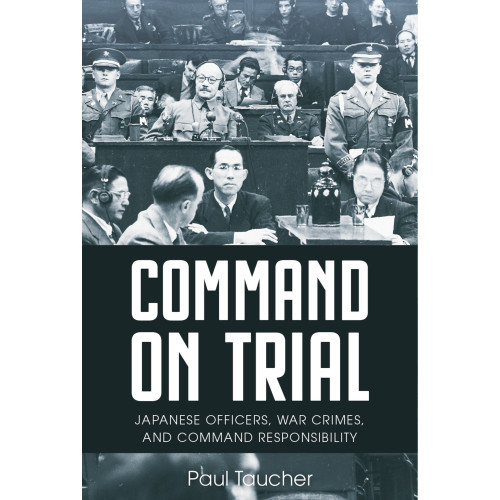
Command on Trial
Japanese Officers, War Crimes, and Command Responsibility
(指揮官受審:日本軍官、戰爭罪行與指揮責任)
ISBN : 978-988-8946-82-2
September 2026
204 pages, 6″ x 9″
- HK$295.00
Ebooks


Between 1945 and 1951, the Allies prosecuted over 5,700 suspected Japanese war criminals across the Asia-Pacific region before one international and many national tribunals using a new legal doctrine known as command responsibility. Command responsibility holds officers criminally liable for the crimes of their subordinates even if they did not order the crimes to occur. Allied authorities believed that the structure of the Japanese military had allowed the crimes to occur and that pursuing guilt for war crimes should extend beyond enlisted soldiers who were the direct perpetrators of war crimes to those who had been in a position of command.
Command on Trial shows that the application of command responsibility in the courtroom was highly unstable and open to manipulation, especially in the trials of lower-ranking officers, resulting in outcomes that were legally, morally, and philosophically inconsistent. A clear illustration of the pitfalls of command responsibility, this book shows that the trials – and command responsibility – did not achieve comprehensive justice and left unanswered the question of who was actually responsible for many of the war crimes that were perpetrated.
‘In this exceptional book, Paul Taucher not only shows how inconsistently justice was carried out in the trial of Japanese military men eighty years ago, but also makes us think about just what constitutes “military command” and what it means or should mean in times of war and peace today.’
—J. Charles Schencking, Nanyang Technological University
‘Paul Taucher’s authoritative and compelling study charts the history of command responsibility in war crimes trials in the Asia-Pacific. While revealing the role it played in delivering the Allies’ goal of comprehensive and necessary justice, it shows how these trials failed to provide a clear understanding of the doctrine, underscoring why it remains so incoherent.’
—Neil Boister, University of Canterbury, New Zealand