Tradition & Perfection 傳統與至善
Paper Cuttings from China and Switzerland 中瑞剪藝對話
ISBN : 978-988-72279-8-4
Distributed for HKU Museum and Art Gallery 香港大學美術博物館
November 2026
136 pages, 8.25″ x 10.63″, 159 full-color and 63 black-and-white images
- HK$200.00
Leave your email so we can notify you when the book is available.
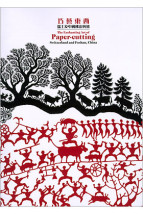
An examination of the cultural properties and historical significance of Asian and European paper cutting traditions. While the UMAG collection provides a comprehensive overview of Chinese subject matters and styles, it is the collaboration with a prominent private collection and the Kunsthaus Interlaken in Switzerland that introduces an international dimension, enabling discussion of the cultural value and differences in monochrome narrative depictions and their related storytelling, as well as a comparative study of paper cutting traditions in East and West. Among the world’s diverse traditions, those of China and Switzerland stand as particularly significant examples, each recognized for its historical depth, cultural resonance, and continuing evolution. Chinese paper cutting, known as jianzhi, numbers among the oldest continuous folk arts in existence, with origins dating to the sixth century CE. Swiss paper cutting, called Scherenschnitte in German or découpage in French, emerged later but developed into a practice so deeply embedded in Alpine identity that it has transcended craft and art form alike to become a national emblem.
The juxtaposition of these cultures invites a comparative analysis of the two traditions, examining their historical development, characteristic subject matter, and cultural functions. While both employ similar fundamental techniques, the trajectories of Chinese and Swiss papercutting traditions reveal profound differences in social context, symbolic language, and relationships to national identity. Through this comparison, we may better understand how a shared artistic medium can be shaped by distinct cultural forces to produce radically different expressions of human creativity.
本書旨在探討亞洲與歐洲剪紙傳統文化內涵與歷史意義。香港大學美術博物館(UMAG)的藏品雖已對中國剪紙題材與風格提供全面的概覽,惟本次與知名私人收藏及瑞士Kunsthaus Interlaken之合作,更添國際視野,從而有助於探討與比較東西剪紙在單色敘事描繪及其相關故事表述的文化價值與差異。在世界眾多多元傳統中,中國與瑞士的剪紙堪稱尤為重要的代表,二者皆以其歷史淵源、文化共鳴及持續演變而備受矚目。中國剪紙屬現存最古老的延續性民間藝術之一,其起源可追溯至公元六世紀。瑞士剪紙(德語稱Scherenschnitte,法語稱découpage),雖出現較晚,卻發展成一種與阿爾卑斯山生活文化緊緊相連的藝術活動,其意義已超越工藝與藝術形式本身,進而成爲瑞士的國家象徵之一。
兩種文化的並置正可引發對二者傳統的比較分析,檢視其歷史發展、典型題材與文化功能。儘管中國與瑞士剪紙均運用相近的基本技法,但其發展軌跡卻展現出社會脈絡、象徵語言及與民族身份認同上的深刻差異。透過這一比較,我們或能更深入理解共享的藝術媒介如何在不同文化力量的塑形下,呈現出截然不同的人類創造力表達方式。