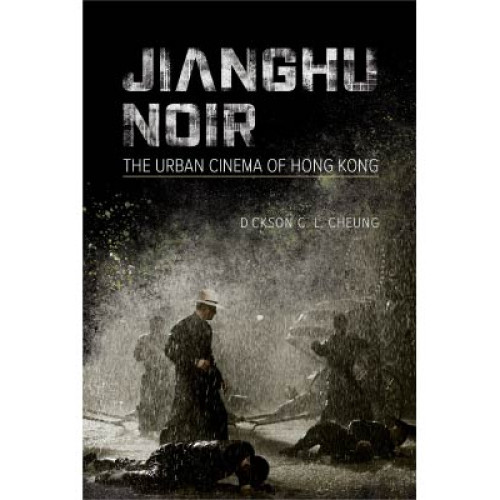
Jianghu Noir
The Urban Cinema of Hong Kong
ISBN : 978-988-8946-94-5
Crossings: Asian Cinema and Media Culture 跨越:亞洲電影與媒體文化
December 2026
148 pages, 6″ x 9″
- HK$225.00
Leave your email so we can notify you when the book is available.
‘Jianghu noir’ are stories of survival – a new film genre that celebrates jianghu heroes’ fight against the power-infused noir cityscape. Jianghu, ‘rivers and lakes’ in Chinese, originally refers to the peripheral universe where ancient martial art heroes make a name for themselves. The term has since evolved and become a powerful concept.
In the cinema of Hong Kong, the modern jianghu is an urban maze where heroes living on the margins negotiate the overlording centres of power. Jianghu takes on a strong sense of noir when the urban landscape becomes a villain that ensnarls the marginalized heroes. In the films of jianghu noir, jianghu is defined by an individual’s orbital distance from the centres of power, whereas noir is defined by surveillance-enhanced architecture.
Jianghu noir is manifest in the works of six auteurs – John Woo, Johnnie To Kei-fung, Felix Chong Man-keung, Alan Mak Siu-fai, Wong Kar-wai, and Philip Yung Tsz-kwong. Jianghu noir begins in Hong Kong, but it is not exclusive to Hong Kong; it is a universal filmic phenomenon that offers new survival strategies in urban space across different culture.
‘Jianghu Noir is an exciting addition to the scholarly work being undertaken around the Hong Kong crime film. Underpinned by a range of philosophical positions, Dickson C. L. Cheung manages that rare feat of bringing fresh perspectives to the idea of Hong Kong noir and neo-noir. This groundbreaking title should be actively sought out by anyone interested in crime films, contemporary Hong Kong, East Asian, and world cinemas.’
— Andy Willis, University of Salford
‘Jianghu Noir is a remarkable reinvention of film noir and neo-noir studies. By bringing the concept of “jianghu” into dialogue with multitude and spherology, Dickson Cheung reimagines Hong Kong cinema as a space of volumetric connectivity and collective becoming. The book expands noir’s conceptual horizons and offers an original framework for understanding urbanity, cybernetic surveillance, and collective life in the Anthropocene.’
— Winnie Yee, The University of Hong Kong